US Food Sovereignty Alliance

Category: Food Sovereignty

Contains all pages under the Food Sovereignty menu item.

  • The U.S. Food Sovereignty Alliance hosts IV National Membership Assembly in Bellingham, WA October 12-15

    The U.S. Food Sovereignty Alliance hosts IV National Membership Assembly in Bellingham, WA October 12-15

    Media contacts:
    Liz Darrow (360) 220-9065, c2cmedia@foodjustice.org
    Ahna Kruzic, (510) 927-5379, ahna@panna.org

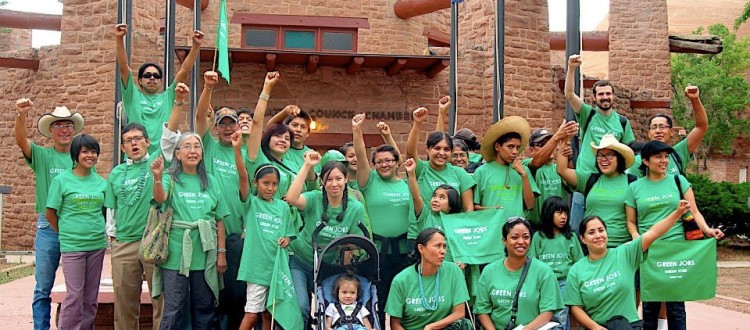
    BELLINGHAM, WA: The U.S. Food Sovereignty Alliance (USFSA) will convene for its IV National Membership Assembly in Bellingham, Washington from Friday, October 12 through Monday, October 15. USFSA consists of over forty grassroots and grassroots-support organizations working to end poverty, rebuild local food economies, and assert democratic control over the food system. We invite members of the press to join us; please contact media representatives for location details.

    WHAT: IV National Membership Assembly of the U.S. Food Sovereignty Alliance

    WHO: U.S. Food Sovereignty Alliance

    WHEN: Friday October 12 through Monday October 15

    WHERE: Various sites in Bellingham, Washington – please contact media representatives for time and location details

    All four regions of the USFSA (Northeast, Southeast, Midwest, and West) held assemblies this year, in which members and allies discussed their priorities and objectives. The IV National Membership Assembly is comprised of plenaries, workshops, and public rallies in support of these priorities. Arising from this process is the Alliance’s collective work plan, guiding our food sovereignty work toward the V National Assembly in 2020. As a part of the Assembly, we will also host the tenth annual Food Sovereignty Prize ceremony, whereby Representatives of Black Mesa Water Coalition and Organización Boricuá de Agricultura Ecológica de Puerto Rico, the domestic and international recipients of the 2018 Prize, will be honored.  

    The IV Assembly in Bellingham, WA is anchored by Community to Community Development, a founding member of the USFSA.

    As a US-based alliance of food justice, anti-hunger, labor, environmental, faith-based, and food producer groups, the Alliance upholds the right to food as a basic human right and work to connect our local and national struggles to the international movement for food sovereignty. For more information, visit www.usfoodsovereigntyalliance.org.

  • Food Sovereignty and Energy Democracy in Just Transitions: Part 3

    Written by Tyler Short of Sustainable Agriculture of Louisville, this post is the third in a three-part series. 

    Introduction

    During the USFSA’s IV National Membership Assembly in Bellingham, WA (October 12–15), the Alliance will award the 2018 Food Sovereignty Prize to Black Mesa Water Coalition and La Organización Boricuá de Agricultura Ecológica de Puerto Rico. The ceremony will occur on Sunday, October 14 (5:30–7:30 PM Pacific). Please follow the USFSA’s Facebook page to view a livestream of the event.

    Below, I explore the notion of Just Recovery within the context of climate catastrophe. I highlight the effects of Hurricane Maria in Puerto Rico and the Just Transition-inspired work of activists, farmers, and educators affiliated with Organización Boricuá.

    This is the third post in a three-part series. Part One offered a background to Just Transition and Climate Justice Alliance. Part Two analyzed the energy democracy and food sovereignty projects of Black Mesa Water Coalition.

    Disasters Result from Natural and Social Forces

    “Disaster requires an ability to embrace contradiction… The possibility of paradise hovers on the cusp of coming into being, so much so that it takes powerful forces to keep such a paradise at bay. If paradise now arises in hell, it’s because in the suspension of the usual order and the failure of most systems, we are free to live and act another way.” Source: Solnit, Rebecca. A Paradise Built in Hell: The Extraordinary Communities That Arise in Disaster (2009). pp 7-15.

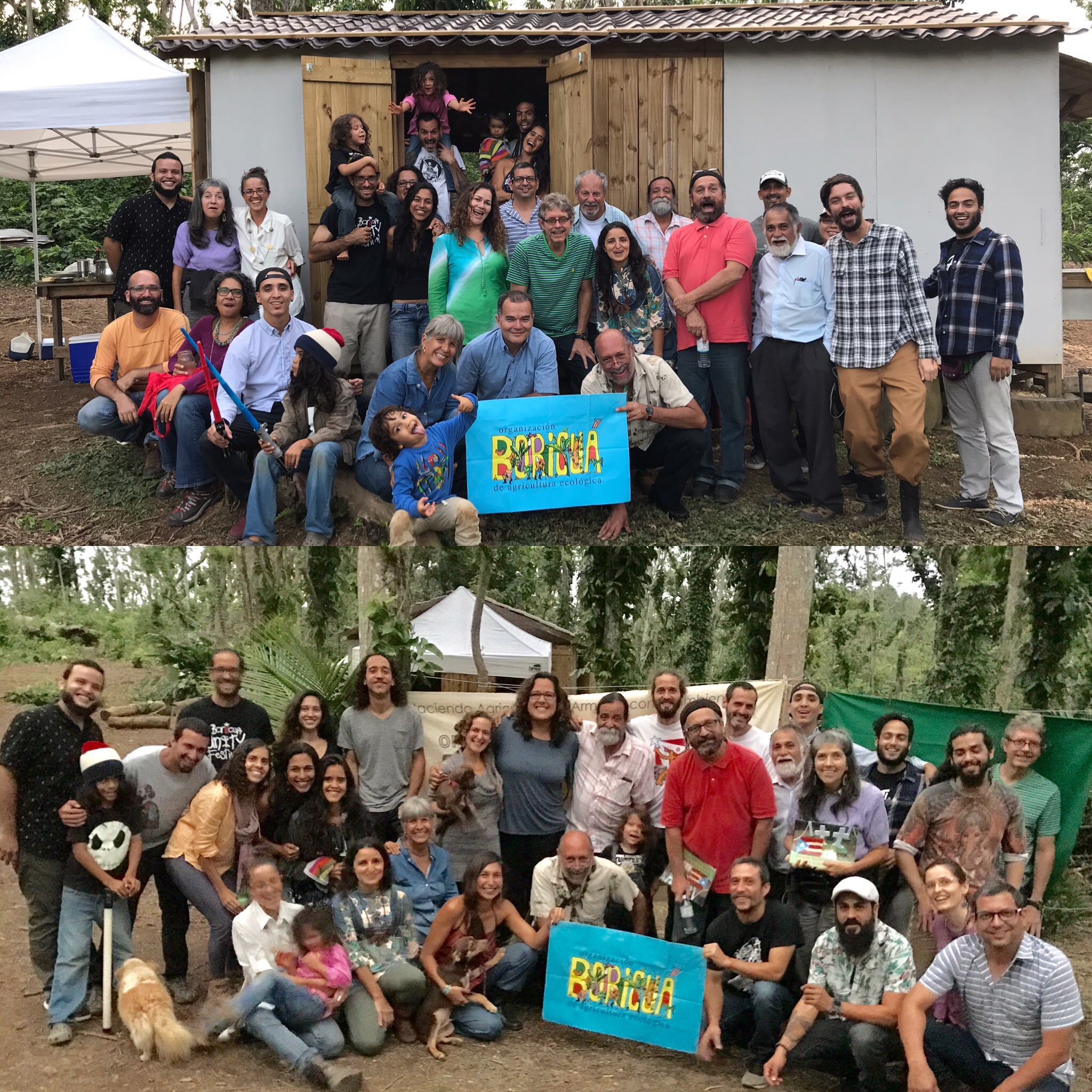
    Organización Boricuá formed almost thirty years ago to enhance the viability and impact of small-scale, ecologically-sound agriculture in Puerto Rico. Their work has inspired young people to actively engage with older generations to restore agroecology in the Caribbean. Under the banner of food sovereignty and in accordance with Just Transition principles, the organization has supported a base of family farmers to develop the capacity of diversified production and increase eaters’ access to healthy local products.

    The organization’s efforts intensified after Hurricanes Irma and Maria left more than three million people without access to electricity, clean water, and food. Flooding, structural damage, and debris shut down major ports and roads in coastal areas. Distribution of basic goods and emergency medical supplies were halted. An estimated three thousand people or more have died from the effects of Hurricane Maria.

    Leaders of Organización Boricuá argue that the social crises sparked by the hurricanes last year are rooted in colonial domination and economic inequality. During the Solidarity to Solutions Week (Sol2Sol; September 7–13) led by It Takes Roots, Jesús Vázquez, a national coordinator of Organización Boricuá, briefly described the post-Maria situation to me by noting the visible combination of militarization and neglect. He pointed to the influx of disaster capitalists seeking to profit from land grabs, development projects, and the privatization of social services amid growing debt problems.

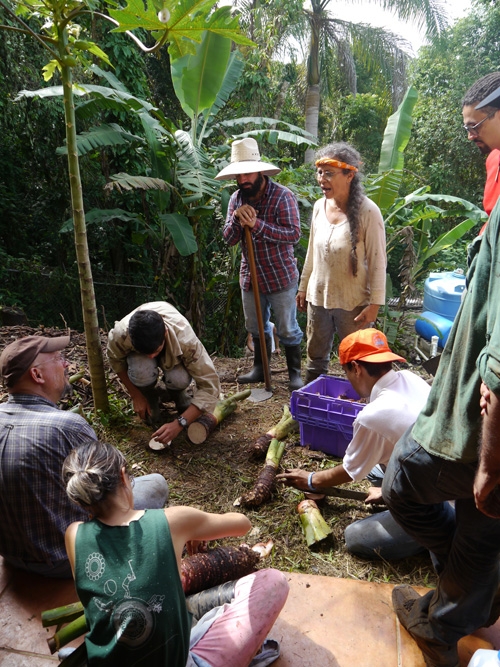
    Organización Boricuá member Magha Garcia of Bosque Jardín Pachamama speaking during the Campamento Agroecológico de Formación Política (Agroecological Encampment for Political Formation) in 2016. Source: Laedlein, Corbin (2017). “Agroecology in Puerto Rico.”

    Vázquez also pointed out that, before Maria, Puerto Rico imported more than eighty percent of their consumed food. This figure rose to about ninety-five percent after the hurricaneVázquez then contrasted two opposing forms of agriculture. He said that conventional farmers lost up to three-quarters of total crop value. Small, biodiverse farms suffered to varying extents, but remarkably less than sites of industrial monocultures of coffee, sugarcane, plantain, and banana plantations. Agroecological farms’ adaptive designs and crop diversity made them considerably more resilient, thus allowing for producer families and their community members to maintain access to root vegetables and other staple foods.

    Agroecology Feeds the World and Cools the Planet

    How does the conceptual framework of Just Transition apply to the grassroots organizing work of Organización Boricuá in the countryside and cities of Puerto Rico?

    In the immediate aftermath of Hurricane Maria and the months that followed, Organización Boricuá anchored the Our Power Puerto Rico Campaign, which Climate Justice Alliance and UPROSE co-orchestrated with strong support from It Takes Roots, Greenpeace, and over twenty other ally organizations. Our Power PR has called for a Just Recovery and Transition away from the extractive economy imposed by the U.S. and multinational corporations. The campaign has focused on collecting, transporting, and distributing “resilient aid” such as water filters, seeds, agricultural tools, satellite phones, solar panels, chargers, radios, stoves, and bicycles with trailers. Multiple USFSA members – including Food First, Grassroots International, and WhyHunger – contributed funding and seeds to augment the capacity of agroecological producers.

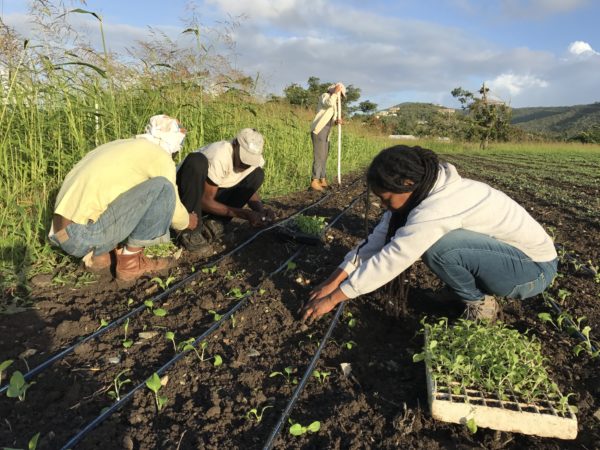
    Members of Black Dirt Farm Collective participating in a Food Sovereignty Brigade in Puerto Rico. Source: Food First (2018). “Puerto Rican EcoFarms after María.”

    Our Power PR amplified the Food Sovereignty Brigades that Organización Boricuá launched in solidarity with peasant families after Hurricane Maria. The organization spearheaded farmer and farmworker check-ins, and they mobilized dozens of urban and rural peoples to assist with repairing damaged fields and infrastructure. Recognizing political education as a fundamental aspect of historical struggle, Organización Boricuá facilitated dialogue about the food sovereignty movement and the practice, science, and political project of agroecology. The brigades reinforced mutual aid networks and reproduced the farmer-to-farmer dynamic of sharing local and ancestral knowledges.

    Aligned with each of CJA’s six meta-strategies to achieve a Just Transition, Organización Boricuá upholds the principle of grassroots internationalism (Build the Bigger We) by functioning as part of CJA as well as the global peasant movement La Via Campesina. Members of the organization resist agribusiness (Fight the Bad) and orchestrate on-the-ground actionsoriented toward creating a regenerative and autonomous economy, such as urban and rural farming, (Build the New). They bring agrarian visions of climate and social justice to the forefront of the climate debate via communications with media allies, the public, and elected officials (Change the Story). Organización Boricuá calls for divestment from the extractive economy and the channeling of capital into community-based and collectively-determined solutions (Move the Money). Furthermore, the organization advocates for policy reform, coordinates marketing of local produce, and facilitates an agroecological certification program (Change the Rules).


  • Food Sovereignty and Energy Democracy in Just Transitions: Part 2

    Food Sovereignty and Energy Democracy in Just Transitions: Part 2

    This post is written by Tyler Short of Sustainable Agriculture of Louisville, and is the second in a three part series. You can view part one here.

    Introduction

    At the USFSA’s IV National Membership Assembly in Bellingham, WA (October 12–15), the Alliance will award the 2018 Food Sovereignty Prize to Black Mesa Water Coalition and Organización Boricuá de Agricultura Ecológica de Puerto Rico. The ceremony will occur on Sunday, October 14 (5:30–7:30 PM Pacific). Please follow the USFSA’s Facebook page to view a livestream of the event.  

    This is the second post in a three-part series. Below, I spotlight Black Mesa Water Coalition (BMWC) and outline the Just Transition framework that underlies their restorative models of political economy.

    Part One of this blog series offered a background to Just Transition and Climate Justice Alliance. Part Three will analyze the notion of Just Recovery, specifically in terms of the Food Sovereignty Brigades mobilized by Organización Boricuá de Agricultura Ecológica de Puerto Rico in the aftermath of Hurricane Maria last year.

    Energy Democracy

    How has BMWC applied a Just Transition framework to their environmental justice program among Diné (Navajo) and Hopi communities in northern Arizona?

    The Coalition underscores that energy must be owned and controlled by communities, not large corporations. Since its formation almost twenty years ago, the organization has fought to stop the dig-burn-dump process of polluting industries that extract water, coal, oil, natural gas, and uranium from the region. In 2005 BMWC and their partners succeeded in shutting down the Mohave Generating Station, forcing the Black Mesa Mine and 273-mile slurry pipeline to close.

    With solidarity from Our Power Communities organized through Climate Justice Alliance (there are currently seven total, including Black Mesa), BMWC has targeted the coal-powered Navajo Generating Station, which exploits water from the Navajo Aquifer and supplies energy to the 300-mile canal known as the Central AZ Project (CAP). The Coalition argues that renewable sources can power CAP and provide energy for the estimated 18,000 Navajo and Hopi homes lacking electricity. In addition to calling for the Navajo Generating Station to shift entirely to solar energy, BMWC has pushed to reclaim former mine sites, install solar panels, and connect the new infrastructure to existing transmission lines.

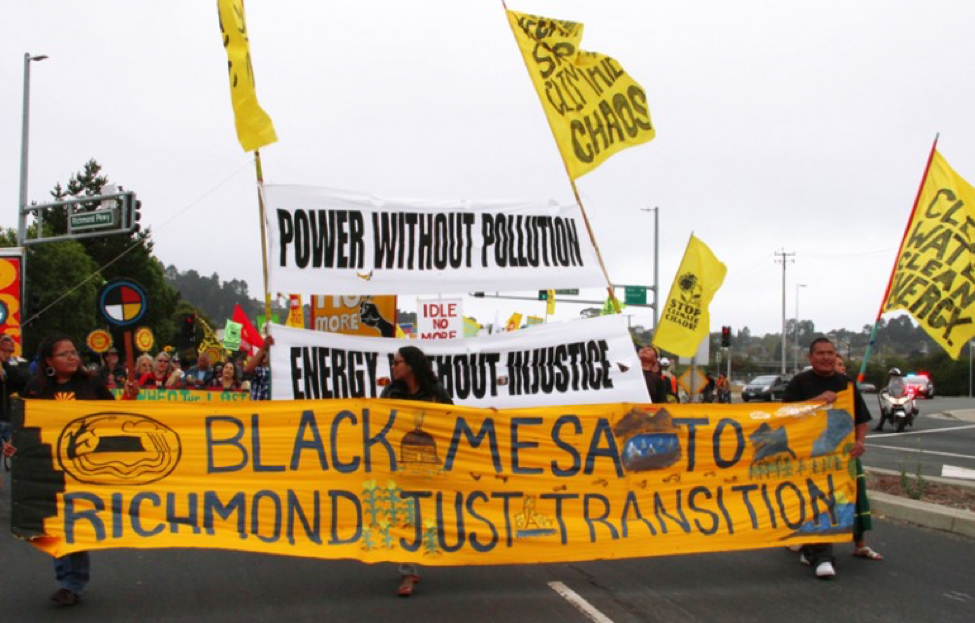
    Our Power Campaign march in 2014. Source: http://breakfreepnw.org/roots-shoots-just-transition/


    Jihan Gearon, the Executive Director of BMWC, commented on the topic of funding for Just Transition projects during a panel discussion at the 2018 Protecting Mother Earth Conference in Nisqually, WA (June 28–July 1, 2018), “Money helps but can cause problems if you’re always chasing it.” The Coalition cites the Navajo Green Economy Fund as a major achievement, although it has lacked proper support from the tribal government since the legislation passed in 2009. Legal interventions have proven successful as well; for example, the CA Public Utilities Commission’s 2013 decision to use revenues from the sale of sulfur dioxide allowances to create a revolving fund in support of renewable energy development.

    Local employment remains a crucial problem for BMWC to address as they organize for visionary economic alternatives away from the extractive economy. The Coalition understands that workers need access to income-generating activities as part of the fair shift towards a green economy. BMWC advocates for a holistic approach that would create meaningful employment in renewable energy production and also revitalize traditional food and fiber production lifestyles.

    Food Sovereignty

    BMWC directs a Restorative Economy Program that emphasizes resistance to extractive production, simultaneously enabling locally-driven models that meet human needs and revive ancestral values rooted in ecologically-sound, culturally-appropriate practices.

    The Navajo Wool Market Improvement Project directed by BMWC includes weaving workshops, trainings on increasing a herd, and demonstrations that involve shearing, sorting, and grading wool. By hosting an annual Wool Buy since 2012, the Coalition has contributed significantly to raising the incomes of traditional wool producers and processors, while strengthening intergenerational relationships for young practitioners to learn from elders and reproduce customs foundational to their place-based identities. BMWC’s objective to enhance the viability of small-scale wool production overlaps with the core purposes of their Food Sovereignty Project to ensure community wellbeing, reverse cultural erosion, and realize self-determination as indigenous peoples.

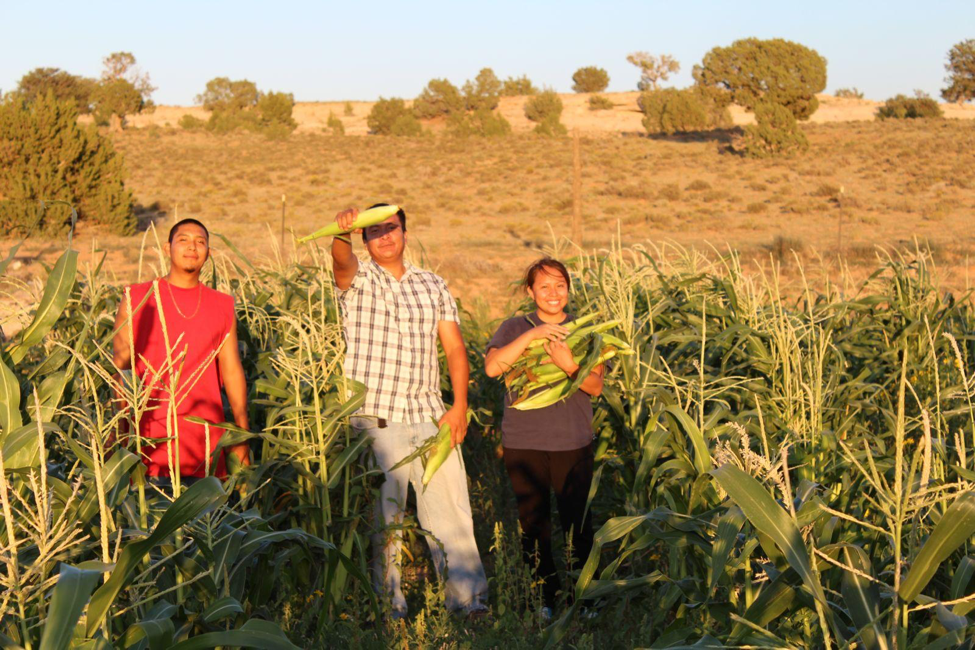
    Roberto Nutlouis (middle) and others harvesting corn in 2012. Source: BMWC’s Facebook page


    BMWC embraces food sovereignty as a platform for fighting to protect humans and other-than-human life from direct threats imposed by the structural forces of settler colonialism and capitalism. Based on a 2014 report, an alarming amount of Navajo Nation residents must drive hours to border-town stores off the reservation to access healthy and affordable food, which negatively affects reservation markets and undermines smallholder production for local consumption. BMWC promotes indigenous food sovereignty as a set of grassroots solutions to decommodify food and land, ending their use as weapons, while also creating a collective capacity to survive and enjoy the abundance of gifts from Mother Earth.

    Leaders of the Coalition call for policies that would propagate and protect local food systems, mainly by redistributing land, removing barriers to obtain grazing permits, providing farmers’ access to credit, ending subsidies to agribusiness, and halting the biopiracy and contamination of native seeds. Roberto Nutlouis – the Restorative Economy Program Coordinator – facilitates popular education at a thirteen-acre community farm in Piñon, AZ, where BMWC affiliates learn about native plants, traditional cultivation techniques, watershed management, and cooking. The Coalition recently hosted its first annual Harvesting Our Kinship Festival (October 4–5, 2018), an educational celebration for honoring past struggles and inspiring young people to become agents of social change.

    “After centuries of global plunder, the profit-driven, growth-dependent, industrial economy is severely undermining the life support systems of Mother Earth. An economy based on extracting from a finite system faster than the capacity of the Earth to regenerate will eventually come to an end… A Just Transition acknowledges Indigenous traditions that tell us that all economic activity must be rooted in an understanding and respect of our sacred relationships with Mother Earth and Father Sky… A Just Transition is our right to define our own food and indigenous agricultural systems. The right to food is sacred and cannot be constrained or recalled by colonial laws, policies and institutions.”  Source: Indigenous Environmental Network’s Indigenous Principles of Just Transition

  • Food Sovereignty and Energy Democracy in Just Transitions

    Food Sovereignty and Energy Democracy in Just Transitions

    This post is authored by Tyler Short, Sustainable Agriculture Louisville. This post is part one in a three part series.

    Introduction

    The U.S. Food Sovereignty Alliance (USFSA) will honor the domestic and international recipients of the 2018 Food Sovereignty Prize – Black Mesa Water Coalition and Organización Boricuá de Agricultura Ecológica de Puerto Rico – at the IV National Membership Assembly in Bellingham, WA (October 12–15). The public award ceremony will occur in the evening of Sunday, October 14. Please register for the event here by Friday, October 5, or follow the USFSA’ Facebook page for a link to the livestream of the ceremony.  

    Leading up to the IV Assembly, I would like to highlight how the honorees apply the conceptual framework of Just Transition to their grassroots processes aimed at asserting democratic control over food and energy systems. I also hope to illuminate their participation in Climate Justice Alliance. In this first post of a three-part series, I will examine the meaning of Just Transition and provide an overview of how Climate Justice Alliance incorporates regenerative economics into its strategic mission.

    Part Two will outline the history of Black Mesa Water Coalition and their current programmatic work to realize a Just Transition in the Southwest. Part Three will focus on the efforts of Organización Boricuá de Agricultura Ecológica de Puerto Rico in the struggle for a Just Recovery following Hurricane Maria, which struck the Caribbean in September 2017.   

    It Takes Roots to Cultivate Solutions: Background to Just Transition

    Climate Justice Alliance (CJA) recently co-organized the Solidarity to Solutions Week (Sol2Sol; September 7–13) in Bay Area Ohlone territories alongside It Takes Roots partners from Grassroots Global Justice Alliance, Right to the City, and the Indigenous Environmental Network (IEN). Local organizations – such as Idle No More SF Bay, Urban Tilth, PODER, and the Asian Pacific Environmental Network – played vital roles in planning and leading the events. I attended Sol2Sol as a CJA delegate representing the USFSA.

    During the week, hundreds of It Takes Roots delegates engaged in membership encuentros (encounters), local tours, and direct actions including street theatre, chants, speeches, and blockades outside of the Governors’ Climate and Forests Task Force meeting and Global Climate Action Summit (GCAS). It Takes Roots organized a contingent near the front of the March for Climate, Jobs, and Justice. The Sol2Sol Summit at La Raza Park provided space for It Takes Roots members to further amplify their visionary, community-led solutions to socio-ecological crises around the world. These were presented in opposition to corporate-driven false ‘solutions’ – for example: genetically-modified foods, carbon trading schemes like REDD+, and geoengineering – promoted by GCAS leaders. The four grassroots solutions advocated by It Takes Roots included: Just Transition; food sovereignty; energy democracy; and zero waste.

    The figure below offers a visualization of a Just Transition. On the left, the Extractive Economy is characterized by militaristic governance, the dig-burn-dump process of exploiting sources of life, consumerist and colonial mindsets, and the enclosure of power and wealth into the hands of a few. On the right, the Regenerative Economy entails deep democratic governance, the regeneration of ecosystems, a worldview of caring and sacredness, and the purpose of attaining social and ecological wellbeing. Stopping the bad and building the new require strategic actions that range from policy-making to the enhancement of workplace democracy.
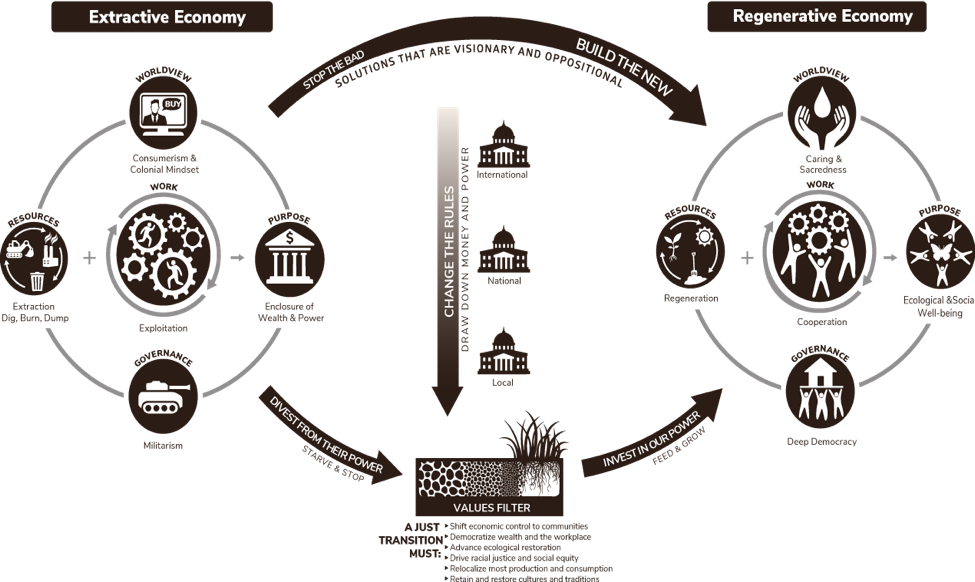
    A Strategic Framework for a Just Transition. Source: Movement Generation’s zine From Banks and Tanks to Cooperation and Caring.


    Trade unions and environmental justice organizations developed the concept of Just Transition about twenty years ago, merging labor and social movement theory with practice rooted within low-income and marginalized communities. In the context of discontinuing harmful economic activity, Just Transition originally centered on the need for workers of polluting industries to secure safe, dignified employment in the new, green economies.

    Just Transition advocates have prioritized reparations to the peoples residing in sacrifice zones who most directly face the social and environmental costs of profit-driven extraction, such as forced displacement, pollution, and systemic poverty. As demonstrated by the Just Transition Alliance, coalition-building between workers, frontline communities, and fence-line communities has been fundamental to advancing a fair shift toward peaceful, healthy societies premised on respect for human rights and the rights of Mother Earth.

    Uniting Communities for a Just Transition

    After three years of deciding on a structure and vision, Climate Justice Alliance (CJA) launched in 2013 as a multi-racial, multi-sector coalition of nearly forty base-building frontline organizations and movement-support organizations dedicated to overcoming the root causes of climate change. Since then, their membership has increased to a total of sixty-seven participating organizations, alliances, and networks. 

    CJA has expanded the original definitions of Just Transition to embrace visions of transforming entire communities from militarized sites of extraction to economic of life. The Alliance’s Just Transition Principles coincide with many of the Indigenous Environmental Network’s  Indigenous Principles of Just Transition. CJA  promotes six interrelated meta-strategies to realize and defend Just Transitions:

    CJA’s Six Meta-Strategies. Source: https://climatejusticealliance.org/how-we-work/


    In the Alliance’s earlier years, members mostly devoted their energies into the Our Power Campaign, a national and broad-based social force constituted by Our Power Communities. Members of the Our Power Campaign have engaged in research, political education, camp-style gatherings, and mass mobilizations with the common goal of ensuring that workers and frontline communities participate as primary stakeholders in policy-making and governance at all levels. The campaign’s main goals have revolved around uniting geographically-dispersed activists and collectively cultivating translocal strategies for the activation of fundamental, justice-centered shifts from extractive economies to localized, regenerative modes of production and distribution.

    In the Our Power Plan: Charting a Path to Climate Justice (2015), CJA et al. affirms that the solutions needed to end the era of extreme energy arise from the resourcefulness, innovation, creativity, and determination of environmental justice communities, many of which interconnect due to histories of racialized and class-based oppression as well as legacies of successful organizing in defense of Mother Earth and communitarian values. CJA leaders underscore the imperative to enact comprehensive approaches that immediately stop pollution at source and uplift grassroots leadership. The Alliance’s strategic plan advocates for: renewable energy; clean water; agroecological food and fiber systems; durable housing; healthcare; public transportation; and zero waste.

    The steering committee of the Our Power Campaign identified Black Mesa, AZ, Detroit, MI and Richmond, CA as the pilot Hot Spots. Black Mesa Water Coalition anchored Our Power in Arizona. The Coalition hosted a training camp in 2013 for participants of the nascent collaboration to share skills and knowledge. The Ruckus Society assisted with the creation of action plans that expanded from past victories of Our Power members, and the Center for Story-based Strategy supported CJA to craft a grassroots narrative in the climate debate that communicates irresistible ideas about generating “power without pollution and energy without injustice.” By means of the Our Power Campaign, CJA has ultimately intended to establish a basis for federal legislation via Just Transition policy work at the local and state levels.

    For Part Two of this blog series, I will shed light on how Black Mesa Water Coalition has advanced a Just Transition among Navajo and Hopi communities. In particular, I will provide examples of popular education pertaining to food sovereignty and legal victories that further their energy democracy agenda. The third part of this series will describe and analyze the Food Sovereignty Brigades mobilized by Organización Boricuá de Agricultura Ecológica de Puerto Rico in the aftermath of Hurricane Maria.

    This post was updated on October 4 to clarify the difference between CJA’s Our Power Campaign and their working group project titled Reinvest in Our Power, which began more recently, functioning as part of the Reinvest in Our Power Network.